A blue sign at a railroad crossing can become one of the most important pieces of information a driver sees in an emergency. The Belt Police Department brought that message directly to motorists on June 24 during Operation Lifesaver’s Emergency Notification System Awareness Day.
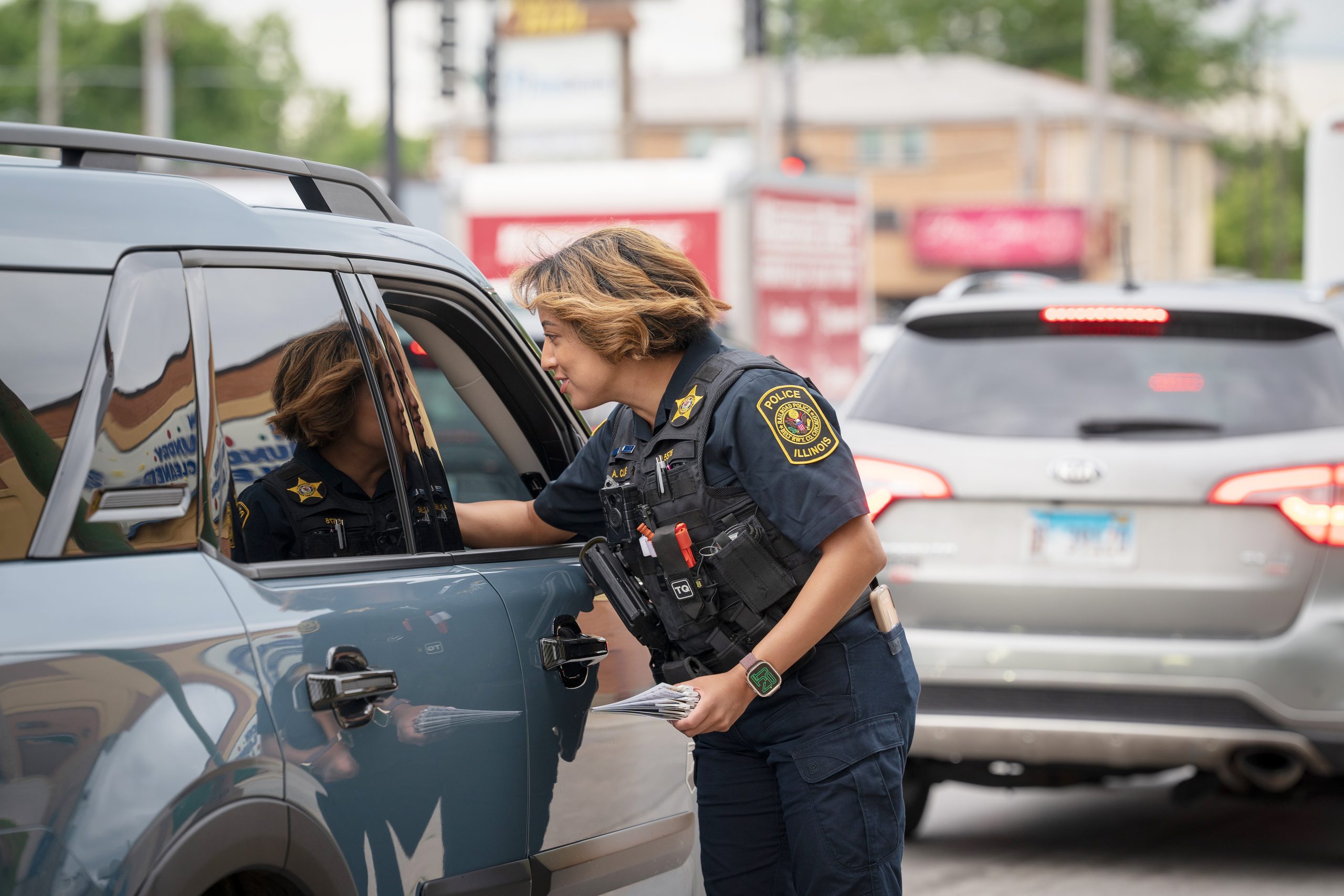
Belt Police Officer Andrea Clunie joined the outreach effort at Central Avenue and 54th Street, where she and others approached drivers stopped at the intersection. The conversations focused on the blue Emergency Notification System, or ENS, signs posted at railroad crossings.
Those signs display the telephone number motorists should use to report a crossing emergency, such as a vehicle stuck on the tracks, a collision or another incident. The call connects to the railroad responsible for that crossing’s control point.
The goal was to make sure motorists know what the sign means and how to use it before an emergency occurs, Clunie said.
“We were trying to make as many contacts as possible with drivers,” she said.
They also distributed key chains featuring the blue ENS symbol and safety visor cards containing information about the system. The compact reminders give drivers something they can keep in their vehicles and reference when needed.
Clunie found many motorists were unfamiliar with the system; therefore, making the brief, personal conversations especially valuable. Her approach was intentionally welcoming, helping drivers understand that the interaction was focused on their well-being.
“I was approaching cars with a smile and just kind of showing them that we care about them, care about their safety enough to come out and do this,” she said.
That familiarity can make a meaningful difference when time is critical.
“I think every second matters in an emergency situation,” Clunie said. “Locating that sign right away can get you to help even faster.”
The effort complements the Belt’s broader Operation Lifesaver outreach, including safety blitzes and school presentations. Clunie is beginning to see evidence that those lessons are reaching younger audiences.
During school visits, she has noticed students increasingly recognize the blue signs before she introduces the subject.
“We’re slowly changing the culture out there, where kids are actually looking for the blue sign or know about the blue sign,” Clunie said.
Her ability to connect with different audiences is an important part of that work. She brings strong interpersonal skills to presentations and adjusts her approach to the people she meets. Her Spanish-language skills also allow her to communicate railroad safety information with Spanish-speaking members of the community.
“I’m able to translate,” Clunie said. “People are not left behind because of their language barrier. That’s super important to me. The fact that I have this ability, I want to use it as a way to get that common ground with people.”
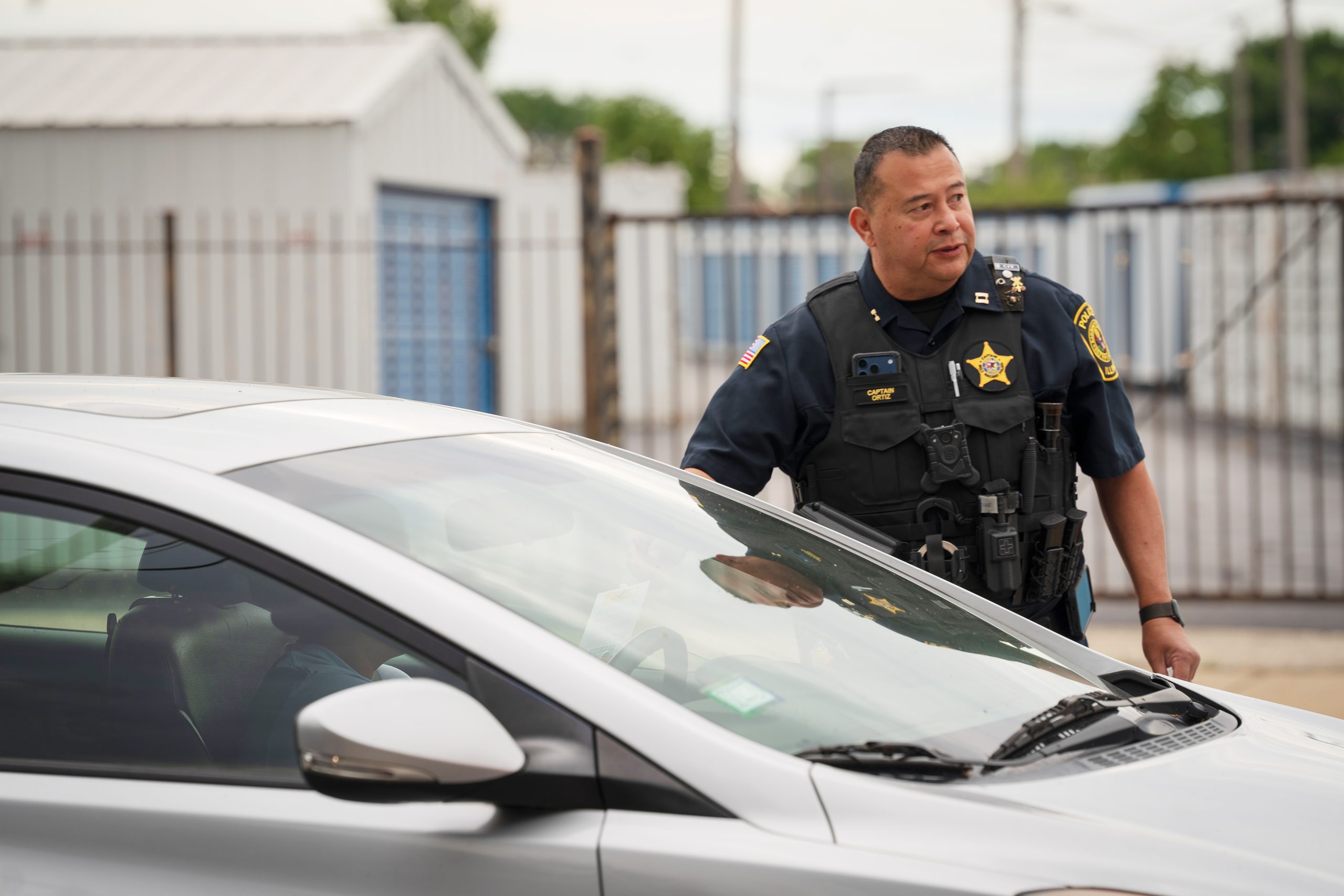
Ortiz named chief of police
Ramon Ortiz was named chief of police for the Belt Police Department in July, formally recognizing the leadership role he already has been carrying out as captain.
“I’m happy to be afforded the opportunity to help the BRC and the Belt Police Department grow in the right direction,” he said.
Although his day-to-day responsibilities remain largely unchanged, the title designation establishes a clear point of authority for team members, partner agencies and members of the public.